Linked List Data Structure
A linked list is a crucial data structure in the realm of computer science. It is composed of nodes, with each node holding both data and a reference (link) pointing to the subsequent node in the sequence. This unique structure facilitates dynamic memory allocation, enabling efficient insertion and deletion operations, which stand in contrast to the limitations of arrays. The dynamic nature of linked lists allows for flexibility in managing data, making them a versatile choice in various computational scenarios.
What is a Linked List?
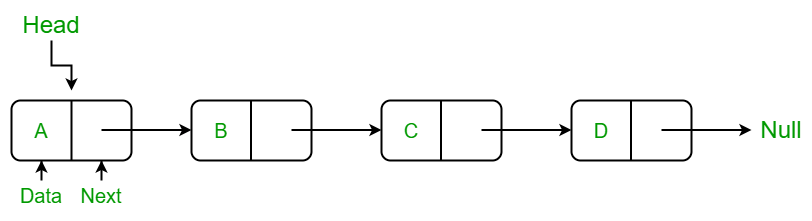
A linked list is a type of linear data structure commonly used in computer science. It is made up of nodes that are linked together through pointers. Each node in a linked list holds both data and a reference to the next node in the sequence. Unlike arrays, which store elements in contiguous memory locations, linked lists offer the advantage of facilitating efficient insertion or removal of elements from any position within the list. This dynamic structure allows for flexible memory allocation and enables swift manipulation of data, making it a versatile tool in various computing applications.
Types of Linked List
Following are the various types of linked list.
Singly Linked Lists
Singly linked lists contain two "buckets" in one node; one bucket holds the data and the other bucket holds the address of the next node of the list. Traversals can be done in one direction only as there is only a single link between two nodes of the same list.

Doubly Linked Lists
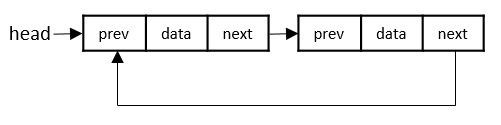
Doubly Linked Lists contain three "buckets" in one node; one bucket holds the data and the other buckets hold the addresses of the previous and next nodes in the list. The list is traversed twice as the nodes in the list are connected to each other from both sides.

Circular Linked Lists
Circular linked lists can exist in both singly linked list and doubly linked list.
Since the last node and the first node of the circular linked list are connected, the traversal in this linked list will go on forever until it is broken.
Basic Operations in Linked List
The basic operations in linked lists involve a range of actions such as insertion, deletion, searching, display, and deleting an element at a specific key. These operations are crucial when working with Singly Linked Lists and are detailed below:
Insertion − This operation involves adding an element at the beginning of the list, allowing for efficient expansion of the linked list.
Deletion − By deleting an element at the beginning of the list, the structure of the linked list can be dynamically adjusted to accommodate changes.
Display − Displaying the complete list provides a comprehensive view of the elements within the linked list, aiding in understanding its current state.
Search − Searching for a specific element using a given key enables quick retrieval and identification of elements within the linked list.
Delete − Deleting an element using a specified key facilitates targeted removal of elements, streamlining the management of the linked list structure.
Linked Lists vs Arrays
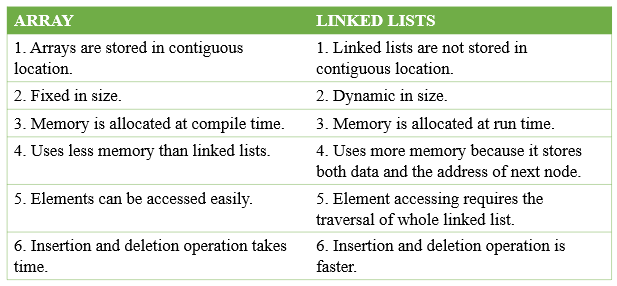
Linked List: Array:
Data Structure: Non-contiguous Data Structure: Contiguous
Memory Allocation: Dynamic Memory Allocation: Static
Insertion/Deletion: Efficient Insertion/Deletion: Inefficient
Access: Sequential Access: Random